
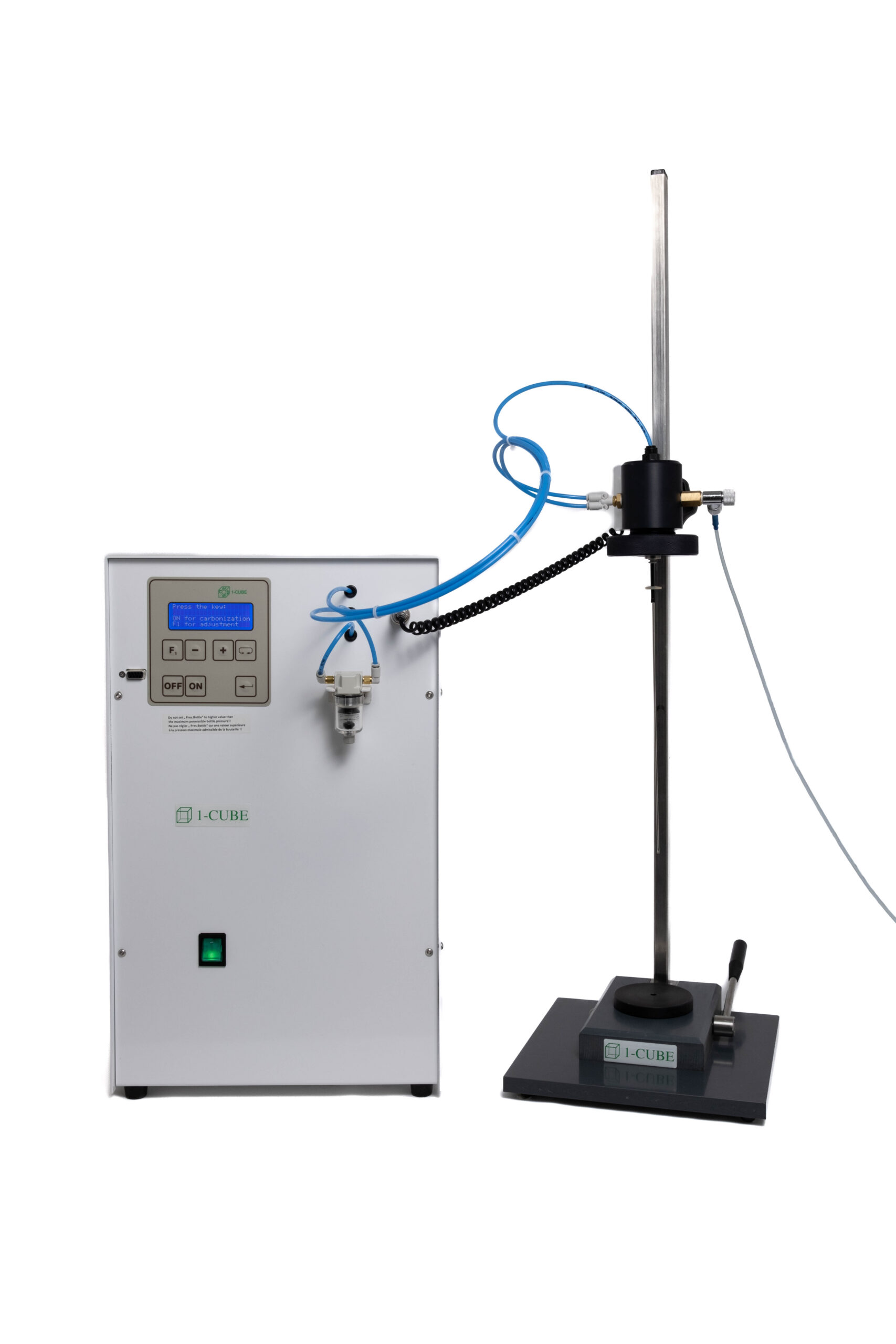
Laboratory Beverage Carbonator Type LSN 2
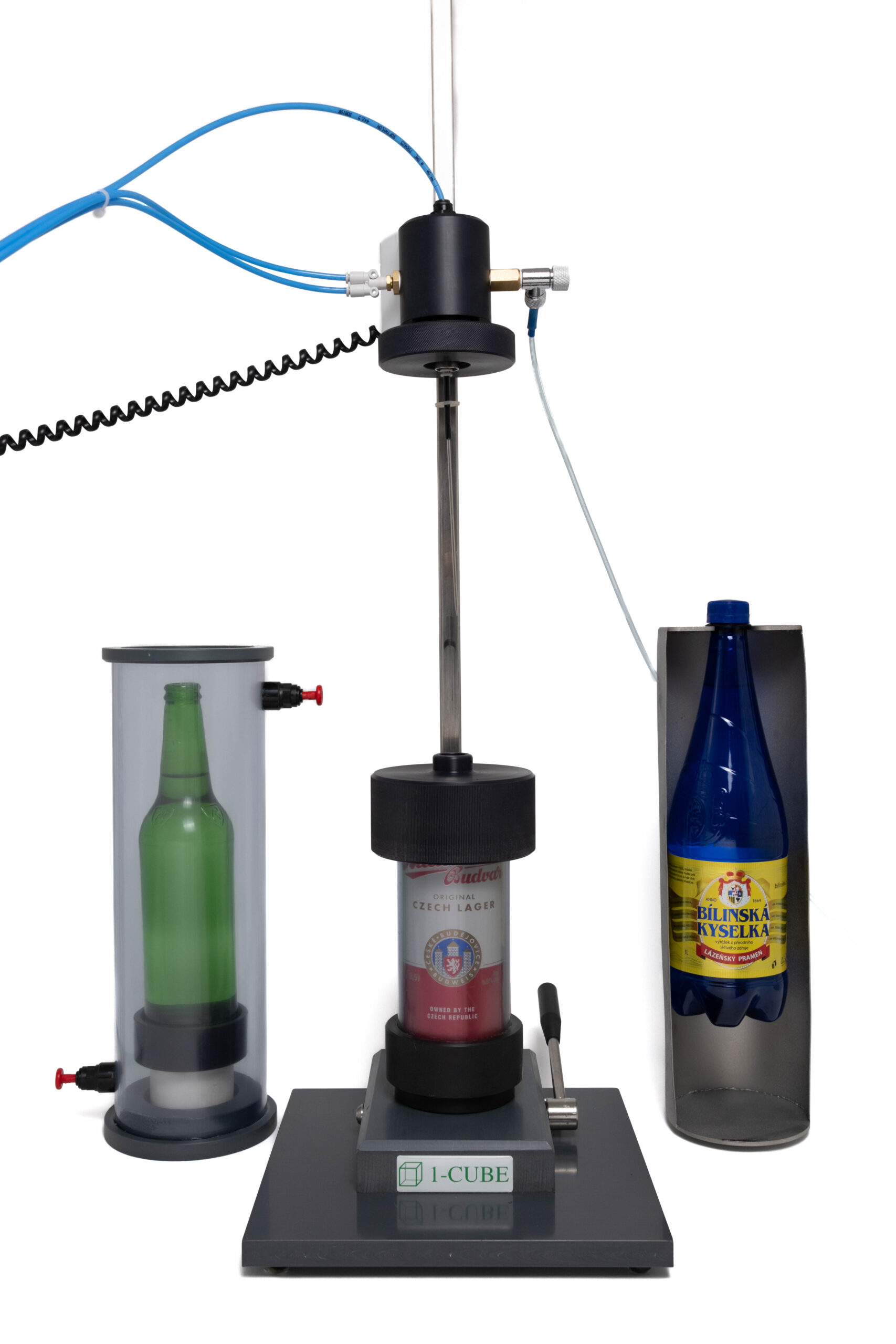
This is a laboratory device designed for the automatic carbonation of beverages in glass bottles, PET bottles, and cans. The device enables carbonation of beverage samples with a precisely defined carbon dioxide content. Thanks to the ability to set a wide range of carbonation levels, it allows quick verification under laboratory conditions of the saturation level at which the beverage achieves optimal sensory properties. Based on these results, the carbonation level can then be set appropriately for production conditions.
Working Procedure:
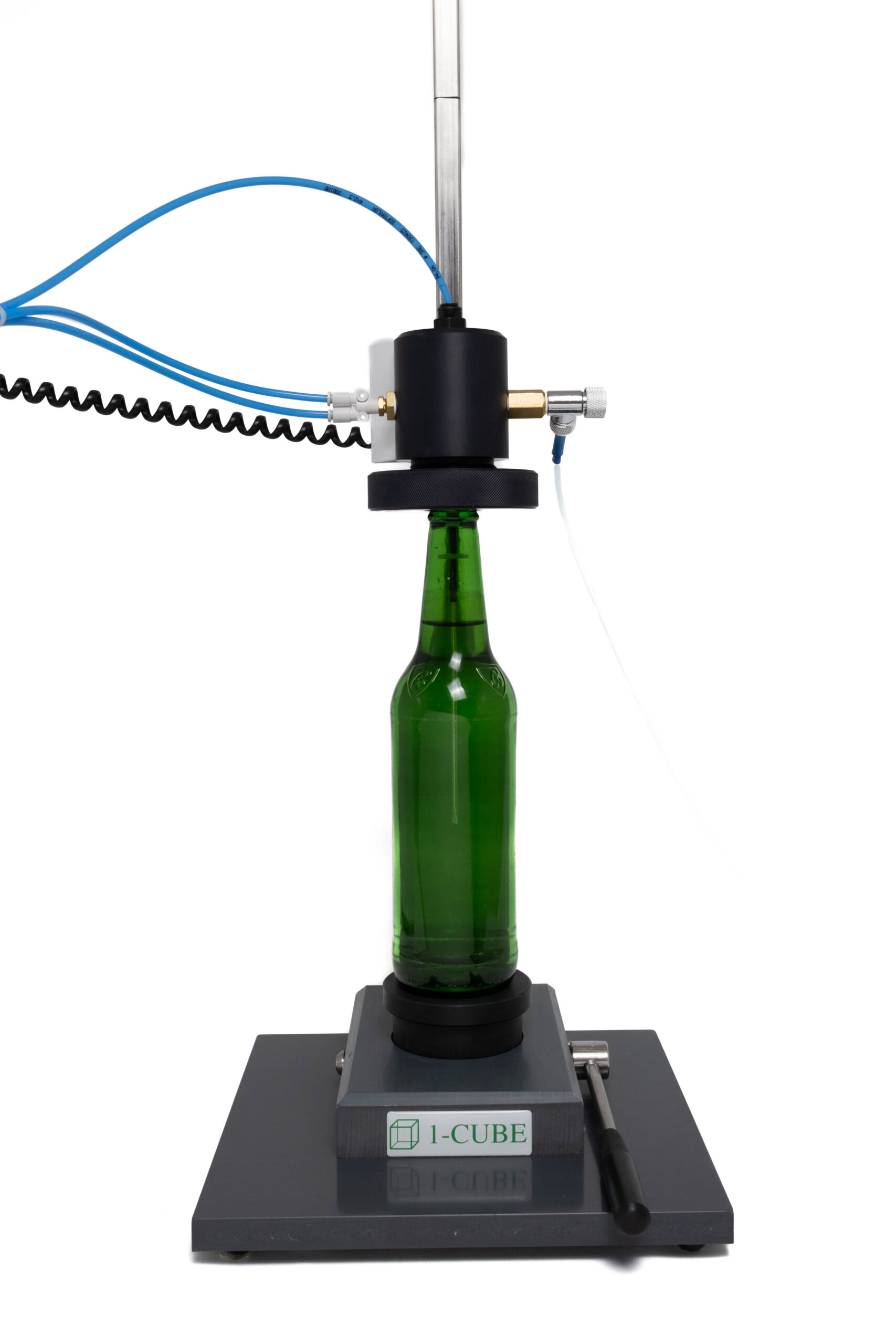
The operator places the bottle into the device holder and selects in the menu the type of beverage to be carbonated (beer, radler, wine, water), the required saturation level, the bottle type, the bottle volume, and the beverage volume. Based on the selected beverage type, the device automatically sets the optimal carbonation rate, which can be manually adjusted during the process if necessary.
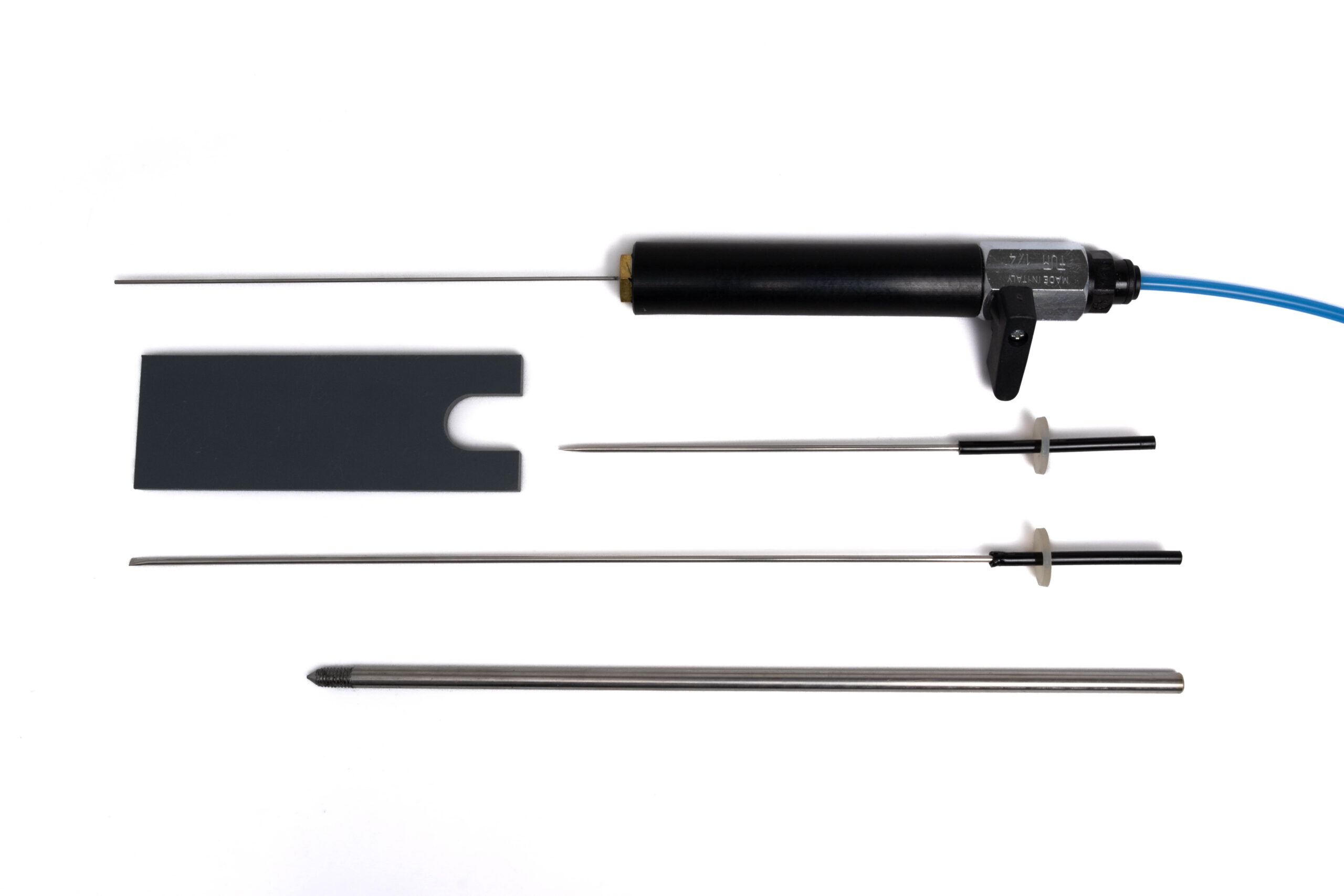
The operator then presses the ON button. The carbonator first measures the volume of the free headspace in the bottle and subsequently starts automatic carbonation of the beverage to the required saturation level. Carbonation is carried out via a carbonation needle, into which CO2 is precisely dosed by a pump. Undissolved CO2 is returned by the pump back into the beverage until it is completely dissolved.
If foam forms in the bottle neck during carbonation, the device automatically interrupts the process, waits for the foam to dissipate, and then automatically reduces the carbonation rate. Once the required saturation level is reached, the process is terminated, which is indicated to the operator both acoustically and by a text message on the display. The operator then removes the bottle from the device holder.
Technical data:
| Parameter | Range / Value |
| Saturation range | 0 až 10 g/l |
| Saturation accuracy | 0,1 g/l |
| Maximum carbonation pressure | 550 kPa |
| Display | Digital, 4 × 20 characters |
| Maximum bottle dimensions | ⌀ 100 mm, height 380 mm |
| Can sizes | 0,25 l , 0,3 l, 0,5 l, 8 oz, 12 oz, 16 oz |
| Power supply | 230V/50Hz, 2,5A |
| Interface | RS232/USB |
| Dimensions (D × W × H) | 410 x 510 x 570 mm |
| Weight | 20 kg |
Scope of Delivery:
- Laboratory beverage carbonator LSN2
- Bottle/can holder
- Adapter and carbonation needle for one bottle size
- Protective cover for glass bottles
- Operating manual
Accessories (optional):
- Adapter and carbonation needle for an additional bottle size
- Adapter for PET bottles
- Can carbonation container
Advantages & Benefits:
- Possibility to use various sizes of glass bottles, PET bottles, and cans
- Fully automatic operation
- High accuracy and calibratability: ideal for laboratories with an established ISO 9001/9002 quality system
- High reproducibility of results
- Accurate results regardless of sample temperature
- Reduction of sample foaming in the bottle
- Low maintenance requirements
- Automatic cleaning of the carbonation needle
- Automatic measurement of free bottle headspace
Downloads
Product sheets, catalogues and technical documentation.
Frequently asked questions
Is a pressurized CO2 cylinder and a pressure regulator included in the delivery?
No, neither the CO2 cylinder nor the pressure regulator is included.
Is it necessary to purchase an adapter and carbonation needle for a different bottle size?
Yes, for each additional bottle type with different dimensions, a corresponding adapter and carbonation needle must be purchased.
What should be done if excessive foam forms during carbonation?
If excessive foam forms, the carbonator automatically pauses carbonation until the foam subsides. After the foam decreases, carbonation resumes. The operator can also reduce the carbonation rate during the process to limit foam formation.
What has the greatest effect on carbonation speed?
The beverage type has the greatest effect on carbonation speed. Beer carbonates the slowest, followed by radlers and wine, with water carbonating the fastest. The beverage temperature also affects the carbonation rate—the lower the temperature, the faster the carbonation.
What information is needed when ordering the device?
Before production, we need to know the dimensions of the bottles or cans so that we can manufacture the appropriate adapters and carbonation needles.